|
|||||||||||
|
|
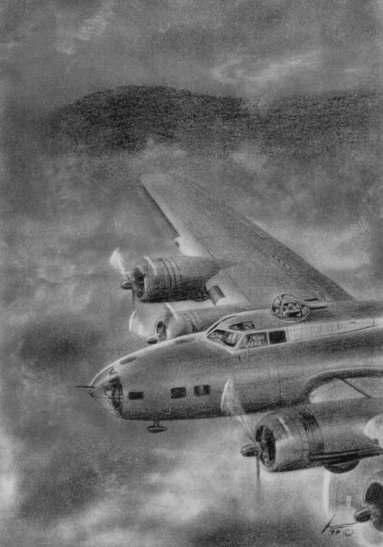
2. Cadiar Berwyn B-17 On 11th.August, 1942, Boeing B-17E Flying Fortress 41-9098 of the 340th.Bomb Squadron, 97th Bomb Group, left Northamptonshire on a navigation exercise to Burtonwood. The weather that day was heavy rain, with visibility less than two miles and a cloud ceiling of 1,000 feet. Take-off was to be 1030, at around 1100, the aircraft was tracked by the Royal Observer Corps, heading towards the Berwyn Mountains in North Wales. The ROC post took 'Granite' action, which normally consisted of lighting red flares ten miles in front of, or to either side of, the aircraft's track. The B-17 crew may not have seen the flares, or, being new to the country, may not have been aware of their meaning, and continued on their heading, crashing into the eastern edge of Cadiar Berwyn with the loss of all on board. The crash was seen for many miles, such was the intensity of the explosion and fire. For many years afterwards, the impact point could be clearly seen, looking like a giant crucifix on the mountainside. It would seem that the crew had become hopelessly lost, being well to the west of their planned track, and had possibly descended through cloud to find their position. An inquiry concluded that the accident was caused by the pilot's lack of experience in bad weather flying. A more experienced pilot carrying out the same exercise had returned to base due to the poor visibility at about the same time that 41-9098 crashed. Very little now remains at the site, apart from small fragments and light alloy remains melted by the fire which followed the crash. Some items are now on display at the Wartime Aircraft Recovery Group museum at Sleap airfield in North Shropshire. These include deactivated .30" and .50" ammunition rounds, control cable turnbuckles, part of a Morse key, bomb shackles and cast light alloy pieces from the ball turret. Just six days after this crash, The 97th Bomb Group flew the first 8th Air Force raid from the UK. The weather hazard was to remain a problem for the USAAF throughout its time in Britain. |
||||||||||
 |
|
|
|
|
|||||||